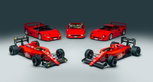
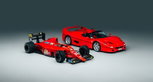
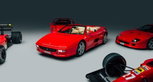
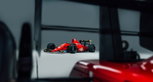
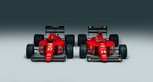
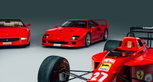
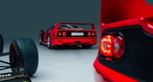
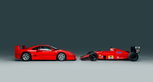
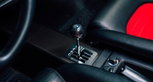
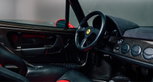
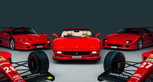
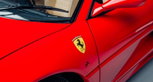
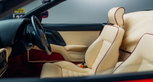
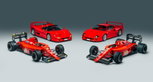
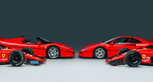
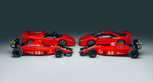
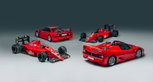
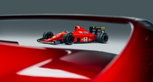
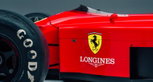
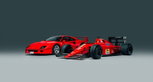




It’s a sensation we now take for granted in so many vehicles. The effortless shift through gears as the car accelerates has become something of an afterthought, or not required at all in terms of the latest, single-drive cars seen on our roads, but back in the late 1980s and into the 1990s, a shift was emerging, both physically and metaphorically, one that would alter the course of Italy’s most beloved car brands for decades. Brought together by our friends at Furlonger Cars and their European partner Egon Zweimüller, “Scuderia ’89 – The Pursuit for Paddle” consists of five special Ferraris connected not by coincidence or colour, but by a single mechanical idea that would go on to redraw both the starting grid and the open road.


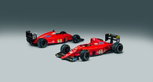
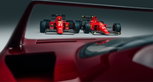
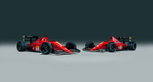
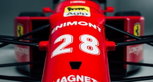
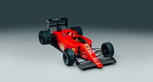
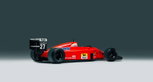
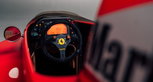
At the centre of this unrepeatable set sits a pair of late-1980s Formula 1 cars, the Tipo 639 development car and the Tipo 640 that followed it into Grand Prix combat. Their common thread is the innovation Ferrari itself now rightly describes as one of its greats - a semi-automatic, steering-wheel-operated paddle shift. Today, it’s so ubiquitous that it’s easy to forget just how radical it was when Maranello decided that a driver shouldn’t have to take a hand off the wheel to change gear at 300 km/h. The 639 and 640 are also meaningful for another reason, one that adds genuine poignancy rather than mere pub-quiz trivia, with the 639 being the last Formula 1 car overseen by Enzo Ferrari himself. In a direct parallel to this, the F40 was famously the last road car Enzo would personally sign off. Suddenly, what could have been a special five car line up becomes a timeline, symbolising the closing pages of Enzo’s era, and the opening chapters of the modern Ferrari we recognise today.

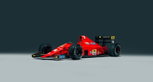
Ferrari 639 F1 (Tipo 639), Chassis #106
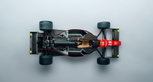
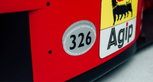
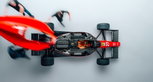
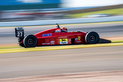
If you wanted one artefact to represent the “before” moment, when the paddleshift idea was still fragile, argumentative, and occasionally infuriating, you’d pick the 1988 Ferrari F1 Tipo 639. Specifically, Chassis #106, the only Tipo 639 believed to remain in private hands, and one of just two factory prototypes and test cars built for the new FISA 1989 3.5-litre Formula 1, which moved the pinnacle of motorsport away from the turbo era.


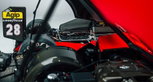
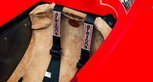
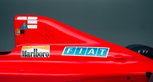
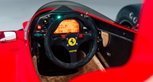
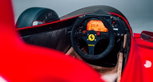
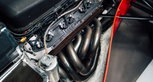
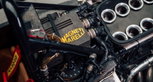
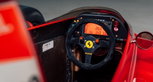
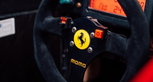
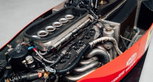
Chassis #106 was used to test Ferrari’s all-new Tipo 035, 3.5-litre V12, producing 685 bhp at an ear-melting 13,000 rpm. It was also the first Ferrari F1 car fitted with the now-iconic paddle shifters, an interface so normal today that we forget it once had to be invented, then proven, then made reliable enough for racing. And reliability, at first, was the sore point. The semi-automatic gearbox was initially problematic, with the root cause ultimately traced not to some mystical Italian gremlin, but to something almost endearingly straightforward. It was the insufficient battery power that caused the issues, where a fix arrived in mid-1989 with help from Magneti Marelli’s electrical expertise.

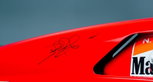
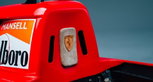
The development programme of course took place at Maranello’s proving ground, Fiorano. Nigel Mansell, Gerhard Berger, and test driver Roberto Moreno would all spend their time behind the wheel, ensuring the 639 would evolve directly into the 640 used for the 1989 World Championship. This particular car’s afterlife is part of what makes it so exceptional today. Kept by the factory from 1988 until April 1999 before being sold into private ownership, #106 has enjoyed diligent custodianship with extensive Ferrari Classiche involvement, occasional appearances at Corse Clienti events, and, crucially, a level of completeness rarely seen in ex-works machinery, let alone their prototypes. It remains fully functional, still fitted with its original factory-supplied and certified Tipo 035/5 engine and its 7-speed F1 shifting gearbox. The car was reunited with the flying moustache himself Nigel Mansell at the 2023 Goodwood Festival of Speed, returning to the event again in 2025, being driven by Harrison Newey. Both 639 and 640 come with a wonderful documentation folder, a key element of these legendary racers, not to mention making for some phenomenal reading. Expertly maintained by Furlonger Cars, the cars both come with an extensive spares package, as well as the expertise of Furlonger's workshop on hand to get the cars running sweeter than ever.


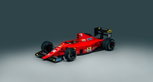
Ferrari 640 F1 (F1-89), Chassis #110
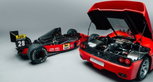
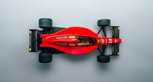
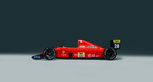
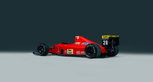
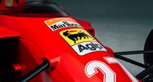
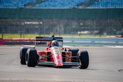
Where the 639 is the laboratory, the 640 is the proof. The Ferrari 640 F1 was the first Formula 1 car to race with a semi-automatic paddleshift transmission, and it marked a clean break into a new era. It also carried added historical weight as the first naturally aspirated Ferrari F1 car in over a decade, and the first Ferrari team car released after Enzo’s passing. Visually, the 640 became instantly recognisable by its sharp nose, narrow monocoque, and those wide wings housing the radiators, wrapping around the car’s key technical creation. Under the skin sat that legendary Tipo 035/5 V12, now paired with a transmission that was now proven to be reliable thanks to the testing work carried out by the 639 F1.


Driven by Gerhard Berger in five Grand Prix during 1989, including Canada, Germany, Great Britain, Mexico, and the United States, chassis #110 saw fierce competition against the sport’s very best. Adding even more depth to this story, this very car became Berger’s replacement wheels following his accident at Imola, where the new paddleshift system played a key role in how Berger could return to racing so soon, even while dealing with heavily bandaged fingers.


Post-racing, #110 initially served as a static display before returning to Fiorano at F1 Clienti for recommissioning. A complete, comprehensive factory restoration followed, culminating in Ferrari Classiche certification. It was then used sparingly until 2015, when it went to a Swiss collector and attended Ferrari Corsa Clienti. Most recently, it switched the lap times for the concours lawns, collecting the coveted Chairman's Trophy at the 2025 Pebble Beach Concours d'Elegance. Now more than ever, both the 639 and 640's eligability for historic racing is becoming more and more accessable, with reports of events like Monaco Historique opening its roster for the 1990's era cars in a new 'Masters' series due in 2028. These high-intensity, period-correct race event are the ideal programme that keeps these cars alive as machines, not just objects.


The road-going evolution: F40, F50, and 355 Spider F1
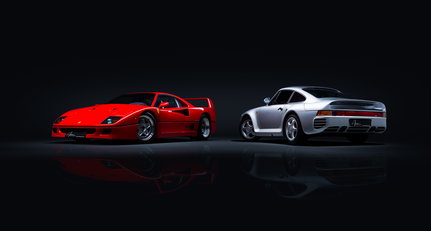
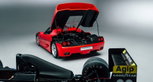
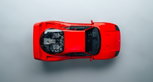
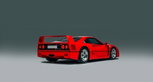
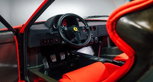
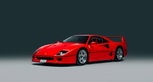
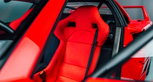
If the collection stopped at the F1 cars, it would still be remarkable, but Furlonger Cars and Egon Zweimüller know just how to bring a story to a glorious finale. Ferrari would do what they often did, and had done for decades prior, translating racing innovation into road-going desirability, then letting that desirability reshape the market. The Ferrari F40 is the anchor point, launched back in 1987 and still the flagship in 1989, it mirrors the 639’s status as the last to be approved by Enzo himself. This example is described as the most successful racing F40 in the UK, one of 30 converted in period, and has now been returned to original factory specification in Rosso Corsa. Showing 24,000 km from new and an interesting provenance throughout its life, it carries that rare double identity, a car with competition history that has come full circle back to the purity of its original intent.


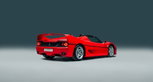
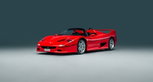
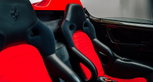
Then comes the car that took over the F40’s almighty legacy, the Ferrari F50. First launched over 30 years ago now in 1995, the car serves as a wonderful connection to Formula 1 and the open road. Its 4.7-litre V12 can trace its roots back to the very unit developed through the 639 and 640 programme, with familiar names like Gerhard Berger being involved in the development of the F50. This particular car is one of just 25 UK-supplied examples, finished in Rosso Corsa, with 14,000 miles from new. It’s highly original, notable for significant “original weave,” and it comes with the kind of accessories that collectors quietly obsess over because they speak to completeness, including both roofs, its travel case, tool kit, and more. Of course, the F40 and F50 were manual-only supercars, even uttering the words automatic seems criminal, but further down the line up, the paddleshift option would begin to gain popularity.


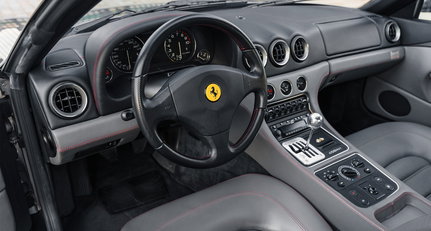
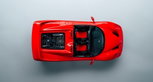
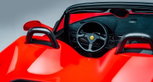
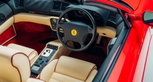
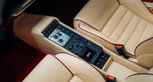
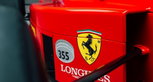
Speaking of which, our final prancing horse is the Ferrari 355 Spider F1, being the very first road car to feature a paddleshift gearbox, not just the first Ferrari, but the first production car in the world. This, almost poetic synergy between Formula 1-derived technology and high-performance road cars in a way that owners could feel every day only puts Ferrari as a brand in higher regard than before. Now firmly finding their feet amongst collectors, this 355 F1 is one of just 139 UK-supplied cars, of course finished in Rosso Corsa, showing just 5,500 miles from new.
To put a value on all this history, drama, passion and power is no easy task, but Furlonger Cars and Egon Zweimüller consider this to be a true once-in-a-lifetime opportunity to acquire not just two of Ferrari's greatest road-going achievements in the F40 and F50, as well as the rocketing-in-value 355 F1, but also the chance to become the custodian of one of Ferrari's greatest F1 cars, as well as the prototype that moulded that greatness. Offers in excess of 20 Million Pounds are considered, which, for this amount of significance and importance, is a more than reasonable offering.
Photos by Alex Penfold