




















A new kid on the block
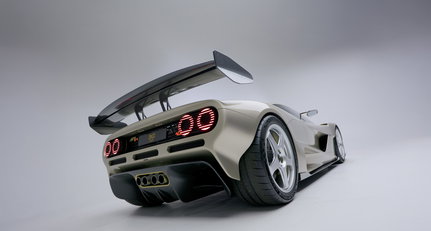
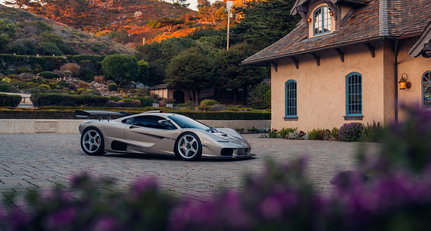
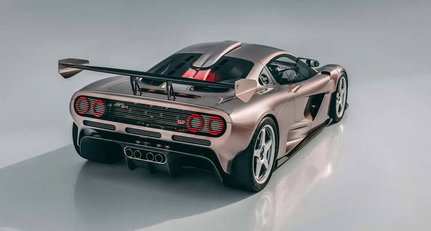
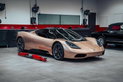
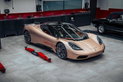
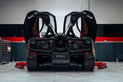
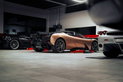
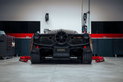
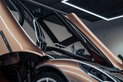
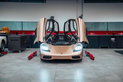
Over the years, employees at Kessel's headquarters in Lugano have seen their fair share of hypercars and unicorn classics enter the famous Swiss workshop for inspections, revisions, repairs and restorations. But even by Kessel’s standards, the latest guest in the garage is exceptional and has caused quite a stir upon arrival. With its shiny golden armour and itsopen clamshell body panels, it resembles a giant tropical insect spreading its wings. The new kid on the block in Kessel's workshop is Gordon Murray Automotive’s critically acclaimed T.50 hypercar, inspired by the legendary McLaren F1, one of Gordon Murray’s most celebrated creations. The car's rear bodywork opens upwards via two butterfly-style panels, allowing Kessel's mechanics to access the mid-mounted powerplant: a 3.9-litre V12 masterpiece crafted at Cosworth, the renowned British engine manufacturer.


Bonds forged in 1970s Formula 1
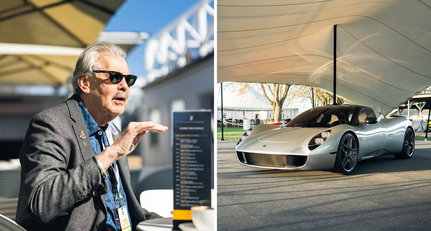
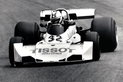
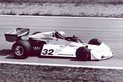
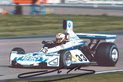
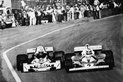
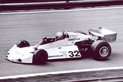
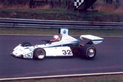
It was also a car with a Cosworth engine that, exactly 50 years ago, enabled the up-and-coming Swiss racing driver Loris Kessel to enter Formula One with Brabham and Team RAM at the age of just 26. The Brabham BT44 that Kessel and his Italian team-mate Maurizio Flammini were scheduled to drive in the 1976 season — after testing at Silverstone and beginning with the non-championship Race of Champions at Brands Hatch — had been designed by the very same engineer who is the mastermind behind today’s newcomer in the service workshop at Kessel's Lugano headquarters: Gordon Murray. His Brabham BT44, in which Loris Kessel made the leap into the premier class of motorsport, was widely regarded as the first major Formula One success of the South African designer, who was just 30 years old at the time.


After returning home to Lugano from Brands Hatch, Loris Kessel described his first experience to the French motorsport magazine Revue Automobile: “It’s really a very good car, and I think I was able to adapt to it quite easily and quickly. Formula One actually requires less physical commitment than Formula Two, although you must of course remain completely in control since the power is almost double that of an F2 car.”

Kessel set the fifth-fastest time in Friday practice on rain tyres despite the cold conditions, but after switching to slicks he lost control in a slow corner and crashed into the safety fences. In the race he had to start with a reserve car, drove cautiously while trying to keep up, and eventually retired. Still, Kessel was congratulated by Ferrari chief engineer Mauro Forghieri and by Bernie Ecclestone for his promising graduation from Formula Two. In total, Loris Kessel entered six Formula One World Championship Grands Prix with a Brabham BT44B run by RAM Racing during the 1976 season.


Some stories never end
With the officially announced appointment of Kessel as a new Service Support Centre for Gordon Murray Automotive covering Switzerland and Northern Italy, history is coming full circle. “Some stories never end — they’re just waiting to be retold at the right moment,” says Ronnie Kessel, CEO of the group and son of Loris Kessel. “We are truly proud of the trust GMA has placed in us. It is a brand that feels very close to Kessel’s identity, and we are thrilled to begin this new partnership.” Both brands not only share the same roots in motorsport, but are also driven by similar values: “GMA’s philosophy focuses on performance, aerodynamics and lightweight construction, which aligns perfectly with our own pursuit of craftsmanship, precision and technical excellence,”Kessel explains.


Kessel Racing has been a fixture in international GT endurance racing for more than 25 years, while Gordon Murrayhas repeatedly amazed the automotive world with ingenious designs, including numerous Formula One cars as well as the McLaren F1, widely regarded as one of the greatest road cars ever built. An example of his ingenuity as an engineer was the Brabham BT46B, introduced in 1978, whose rear-mounted fan extracted air from beneath the car, generating enormous downforce. This innovative aerodynamic solution was banned after just one race due to its clear competitive advantage — with Niki Lauda dominating the Swedish Grand Prix — yet the concept reappears today in the GMA T.50 now sitting in Kessel's garage.


Enabling the ultimate driving experience
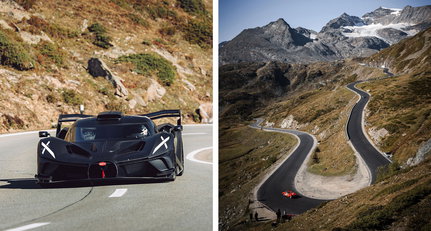
As the new Service Support Centre, Kessel will manage the entire portfolio of the British hypercar boutique manufacturer, including the GMA T.50, T.50s Niki Lauda, T.33 coupé, and its spider version. Due to its location, the new centre will primarily serve customers from Switzerland and Northern Italy, although it will not be restricted to a strictly defined geographical territory.

Considering Kessel’s long track record in servicing some of the world’s most demanding hypercars, as well as the historic connection between Kessel and Gordon Murray, GMA owners can feel confident they are in excellent hands. The team in Lugano offers a wide range of certified expertise, uncompromising quality standards, and a bespoke service that fully respects the vision of both brands. Ultimately, Kessel’s primary goal is to enable every enthusiast — whether they own a race car, a classic or a contemporary hypercar — to enjoy the ultimate driving experience.