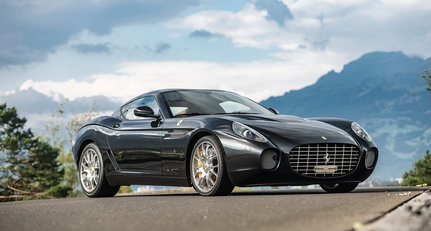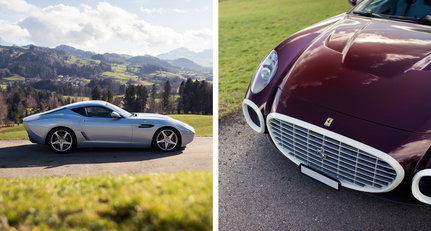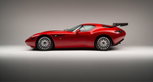





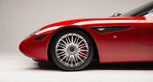








The Maserati Mostro by Zagato saw the light of day in utmost elegance, being unveiled at the 2015 Concorso d’Eleganza Villa d’Este, immediately establishing itself as one of the most breathtaking creations of the Italian coachbuilder’s “Iconic” era. A period dedicated to reimagining the most spectacular Zagato silhouettes of the fifties and sixties with a modern approach. Created to celebrate Maserati's centenary, this spectacular project was intended to bridge the gap between the Italian racing heritage and modern technology, using contemporary materials like carbon fiber and an up-to-date and emotional sounding Maserati powertrain. Only five modern-day Mostro coupes were ever built, making it a pleasant surprise even at the most prestigious car events. It captures the essence of both the Trident from Modena and Italy's oldest coachbuilder, that has spent eleven decades pushing the boundaries of automotive styling.
Sir Stirling Moss' monster from Milano
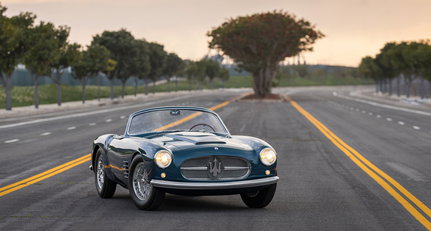
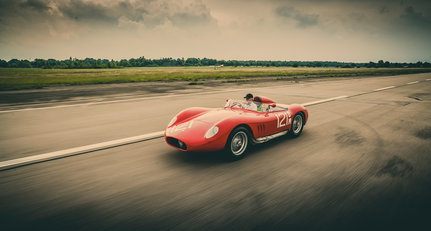
1957 was the year in which its historical inspiration competed in Le Mans, earning its nickname through its sheer presence. The original Maserati 450 S Coupé was a bespoke commission by the motorsport icon Stirling Moss, who envisioned a closed-body racer specifically for the world's most famous endurance race. In cooperation with the British aerodynamicist Frank Costin, Zagato had sculpted a body designed to slice through the air on the eye-wateringly fast Mulsanne straight. Which would have been a huge advantage over the open barchettas which were the norm at the 24 Heures back then. Although a mechanical failure forced the streamlined Coupé to retire early during its debut race, its legend was already cemented. Nicknamed il Mostro, it became a symbol of brute force packaged in a surprisingly elegant shell.

Maserati DNA like the original
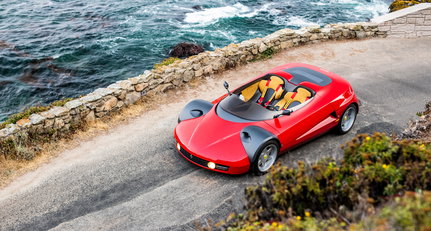
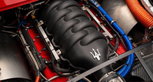
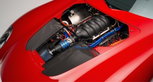
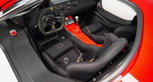
When recreating the Mostro, the Milan-based Zagato Atelier didn’t just want to create a mere modern replica but to reinterpret the fifties design in their own way. The result is a silhouette defined by an incredibly long hood and a compact, rounded rear end that underlines the mid-front engine placement. Hidden under the spectacular carbon fiber bodywork lies a MonoCell chassis, supported by a steel tube structure. The engine choice is quite similar to the one of the original. The engineers relied on a V8 from Modena, this time with a displacement of 4.2 liters – circa 300 cubic centimeters less than back in 1957. The modern Maserati engine features dry-sump lubrication and is estimated to produce around 421 horsepower. To ensure optimal weight distribution through a transaxle layout, the engineers utilized a sequential six-speed gearbox which sits at the rear. The car features a massive, fixed rear wing and butterfly doors, while the interior remains a focused race car environment with fixed glass windows.


Owned by the same family since 2016
Unlike many other supercars that change hands frequently across different continents, this example has spent its entire life within the borders of Austria and is road legal there. It has been meticulously cared for by the same family since it left the factory, representing a significant piece of their private collection. During its time in their possession, the ownership was transferred once from one brother to the other, ensuring that the vehicle always remained within the close circle. With 106 kilometers on the odometer, the car presents itself in virtually new condition and is an investment-grade piece of Maserati and Zagato history.