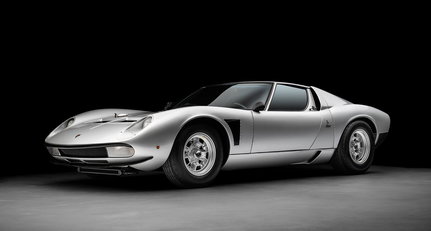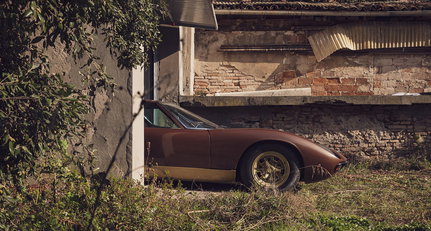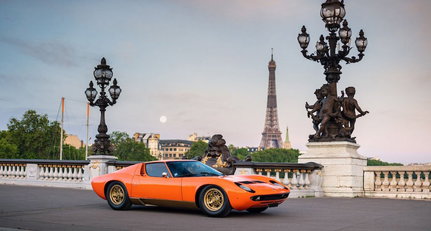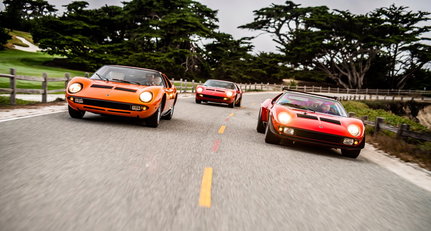
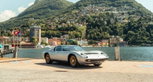





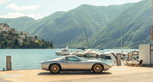
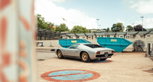
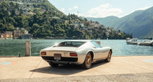

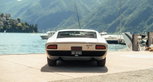

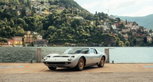
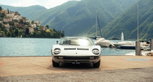


As cliché as it is to say it, there are many beautiful cars out there, but one that arguably stands above them all is the Lamborghini Miura, a machine so seductive, it feels almost indecent to call it just a car. It is more than that, it’s sculpture, it’s theatre, it’s Italy distilled into metal and leather. Even now, more than half a century since it first transformed the motoring world and created an entirely new genre of supercars, the Miura remains an object of pure desire. Sure, Mercedes-Benz created perfection with the 300 SL Gullwing, Ferrari have an entire stable full of golden-era stunners, but the Miura truly is art on four wheels.

Born in 1966 and penned by a then 25-year-old Marcello Gandini at Bertone, the Miura rewrote the rulebook for what a sports car should look like. Up front, those glorious, lash-fringed headlamps almost give a kind of feline mischief, as though the c3ar knows exactly what it’s doing to you. The bodywork flows in curves that feel impossibly organic, every line is considered and fluid, creating a package that although was small in stature, will generate looks from just about any, in any location, at any given time.


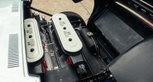
Underneath that low-slung clamshell rear shell sits a transverse V12, a piece of engineering mastery by Giampaolo Dallara, Paolo Stanzani and Bob Wallace, who worked on the prototype vehicle in their spare time during the evenings. In fact, the Miura was originally conceived by Lamborghini's engineering team, which also used their spare evenings to design and develop the car, one that went against Ferruccio Lamborghini, who preferred powerful yet sedate grand touring cars over the race car-derived machines produced by local rival Ferrari. That said, when the development mule was revealed to Ferruccio, he gave approval for its development to continue, allowing the brand to create the world’s first true supercar.
Supercars today stand for something entirely different to what the Miura achieved upon launch, as while its unusually mounted V12 and race car for the road mentality gave it a real kick, its performance figures were never the point. You don’t fall in love with a Miura because it does zero to sixty in under seven seconds. Instead, you fall in love with its theatre, its many, many quirks, its spine-tingling soundtrack, and the way people’s faces light up the moment they spot it in the distance.

So, is the Miura truly the most beautiful car ever made? That’s a debate for pub tables and concours lawns, but if you find yourself lucky enough to be stood in the presence of one, take a few extra moments to bask in every angle of one, and ask yourself if there truly is a car that oozes style quite so effortlessly.