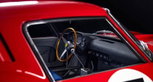

15 — Ferrari Purosangue
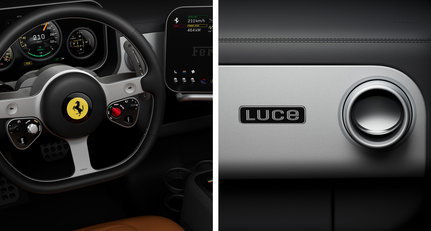
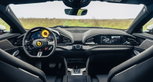
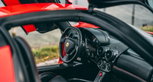
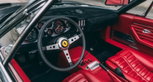
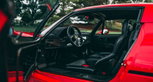
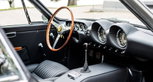
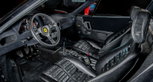
As the manufacturer's first crossover, the Purosangue was initially shunned by purists, but inside, this 'thoroughbred' is Ferrari through and through. Slip into its luxurious cockpit of sculpted leather, four bucket seats, well-integrated screens, and subtle ambient lighting. The cherry on top is the classic Ferrari steering wheel with Manettino that reminds you it's still a driver's car. Every detail, from the twin-cockpit dash and slim vents, transforms family practicality into pure Ferrari theatre.

14 — Ferrari Testarossa
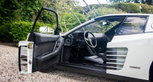
Together with the Lamborghini Countach, the Ferrari Testarossa was the sports car icon of the 1980s, Pininfarina's wide-body design and howling twelve cylinders capturing pure cinematic glamour. Inside, the cockpit embraces purposeful simplicity with clean black leather surfaces, red-on-black gauges, and minimal switchgear that eliminates distraction and hones focus on the drive. The minimalistic three-spoke steering wheel and pop-up vents reinforce this no-frills ethos.

13 — Ferrari Enzo
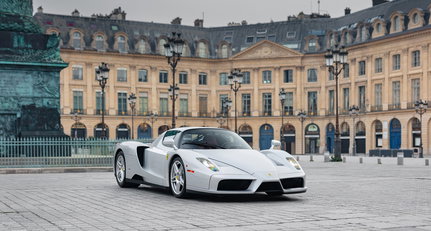
The Ferrari Enzo held an exalted status in the naughties as Ferrari's technological pinnacle and hypercar pioneer, bridging F1 components with road-legal innovation through its carbon-fiber chassis and screaming V12. The interior delivers race-derived austerity with black Alcantara, exposed carbon accents, and a purposeful cockpit with two round dials and a digital cluster, focused solely on performance data. The slender three-spoke wheel and fighter-jet switchgear underscore this purist ethos, making every drive feel like a grand prix qualifying lap.

12 — Ferrari 360 Challenge Stradale
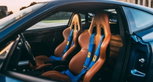
The Ferrari 360 Challenge Stradale pioneered Ferrari's modern lightweight V8 special series philosophy, serving as the direct ancestor to later icons like the 430 Scuderia and 458 Speciale through its relentless focus on track-ready minimalism. Its interior strips away excess with exposed carbon fiber tub, Alcantara- or leather-trimmed seats, and bare aluminum accents that amplify the sub-1,300kg ethos. A stripped-back dash with essential analog gauges and no-nonsense switchgear delivers the purity that suits the rest of the car.

11 — Ferrari 246 Dino
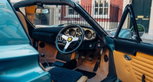
The V6 coupe was the manufacturer's affordable entry-level model, yet its interior shows no trace of compromise with its sweeping, elegantly curved dashboard. This positioning also didn't go hand in hand with fewer round instruments; instead, the cockpit boasts beautifully formed gauges by Veglia Borletti. This grand touring refinement elevates the once accessible Dino into timeless Ferrari sophistication.

10 — Ferrari 355
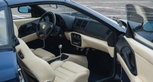
The 1990s marked sports car design's transition from analog past to digital future, with the compact Ferrari F355 leaning more toward the traditional side. Its interior blends ergonomic intimacy with a distinctive two-tone dashboard, gated shifter featuring a long-throw lever, and open column design that celebrates mechanical purity. Aluminum accents and taut leather surfaces reinforce this focused cockpit, turning every gear change into a tactile symphony.

9 — Ferrari 365 GTB/4 Daytona
The Daytona is Ferrari's most iconic front-engine grand tourer, blending Colombo V12 power with Pininfarina's timeless scalloped nose in a package that defined 1970s supercar elegance. Its interior offers opulent simplicity with rich leather upholstery with an iconic perforation, Momo three-spoke steering wheel, and chic Veglia gauges.

8 — Ferrari F50
The Ferrari F50 stepped into the mighty shadow of the F40, carrying forward its uncompromising tradition of raw, track-focused engineering as a spiritual successor limited to just 349 examples. Its interior delivers unrelenting race austerity with exposed carbon fiber tub, minimal Alcantara or leather padding, and a cockpit that prioritizes the V12's scream over comfort. The harness anchors and stripped-back aluminum pedals reinforce this purist lineage.

7 — Ferrari 250 GT Lusso
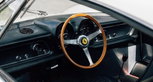
The Ferrari 250 Lusso, whose name translates to 'luxury', exemplifies the quintessential 1960s Ferrari cockpit, balancing grand touring poise with understated sporting pedigree. Tachometer and rev counter sit prominently centered in the Veglia instrument cluster within a harmoniously contoured dash, while polished metal trim and hand-stitched door panels evoke effortless Scuderia refinement. The huge wooden Nardi steering wheel with polished rim and thumb notches for finger grip anchors this elegant cabin. A compact gated shifter and purposeful pedal box complete the picture.

6 — Ferrari 288 GTO
The first modern supercar from the Prancing Horse kicked off Ferrari's legendary 'Big 5' series (GTO, F40, F50, Enzo, LaFerrari) and is currently riding extreme market hype, with values soaring past nine million dollars for its rare 272-unit production. Its interior channels Group B brutality through a functional cockpit of leather and fabric, centered analog gauges, and purposeful toggle switches that prioritize raw turbo V8 response over luxury.

5 — Ferrari 250 GT SWB Berlinetta Competizione
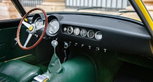
It stands as one of the most coveted competition GTs of the 1960s, its short-wheelbase chassis and Colombo V12 succeeding the legendary 'TdF' by dominating the Tour de France and Tourist Trophy with relentless pace. While green leather was not a standard selection for the spartan alloy-bodied racers, it remains a celebrated custom-choice for discerning clients, creating a striking signature interior that contrasts vivid Veglia gauges and frames a minimalist dash in absolute racing authenticity.

4 — Ferrari 365P Berlinetta Speciale
A revolutionary 1966 concept car that pioneered the central driving position layout decades before the McLaren F1, commissioned for legendary Gianni Agnelli. Its interior blends futuristic experimentation with period luxury through a contoured central throne flanked by two recessed passenger seats, minimalist Veglia gauges, and functional open-gated shifter that make the 'Tre Posti' a bold statement of forward-thinking Ferrari vision.

3 — Ferrari 250 GT California Spyder
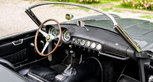
The California Spyder commands auction supremacy among open-top classics, famously owned by Alain Delon, whose black SWB example cemented the model's French Riviera glamour. Its interior blends 1950s grand touring luxury with supple leather seats and a classic three-spoke steering wheel. The Veglia instrument cluster, set into a minimalist body-colored dash, and a compact gated shifter complete this sunlit cockpit, transforming every coastal drive into a silver-screen fantasy.

2 — Ferrari F40
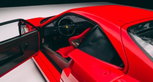
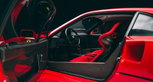
The Ferrari F40 stands as the quintessential Ferrari, Enzo Ferrari's final masterpiece celebrating 40 years of the marque with uncompromising Group C-derived brutality limited to 1,311 examples. Its interior delivers unrelenting race austerity through an exposed carbon-kevlar tub, bare door shells with simple pull-cords, and vibrant red cloth bucket seats that provide the only splash of color in a sea of grey composite. Minimal Lexan windows amplify the twin-turbo V8's howl over any creature comfort, while the purposeful three-spoke wheel and stripped-back toggle switches reinforce this spartanic manifesto.

1 — Ferrari 250 GTO
The first GTO dominates auction records as Enzo Ferrari's ultimate racing GT masterpiece, with just 36 homologation specials built for track dominance. Its interior defines purist race austerity, featuring blue cloth upholstery on lightweight buckets and a functional, black wrinkle-finish dashboard designed to eliminate glare. The iconic three-spoke Momo steering wheel with a wooden rim crowns the cockpit, perfectly framing the massive central Veglia rev counter and a towering stainless-steel gated shifter that demands the same rhythmic, mechanical precision as a 24-hour stint at Le Mans.