

Ask us for our favourite interior design concepts of the 1980s, and we will point you towards the modest, yet highly functional and subtly elegant cockpits of the BMWs designed under Claus Luthe — especially the cars known internally as E30, E32 and E34. With their driver-oriented dashboards and aviation-style controls within reach, the cars introduced progressive ergonomics into automotive design. At the same time, the clean horizontal lines, logically grouped switches and large analog instruments with no ornamentation expressed a functionality that other brands missed. Meanwhile, the first on-board computer systems and digital readouts for check control suggested a bright, technologically advanced future was within reach.

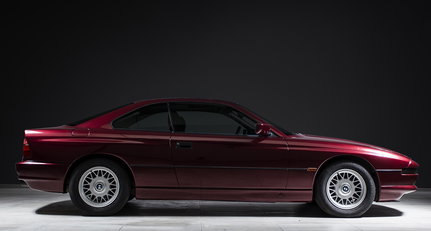
But in 1989, BMW introduced a car that was about to change everything — the BMW 8 Series, or E31. Exterior designer Klaus Kapitza had merged the sharkish silhouette of the BMW 6 Series with the geometric wedge shape of the BMW M1 into a sleek and stylish performance coupé tailored to roam Germany's speed-limit free Autobahn network — which was about to extend significantly with the fall of the Berlin wall and the country's reunification. For the cabin architecture of the new 8 Series, chief designer Claus Luthe had commissioned Hans Braun.

The car's final interior turned out to be both a continuation of the functional and modest 1980s BMW philosophy and a significant departure toward a more modern and immersive high-tech cockpit. The most extreme driver tilt of any BMW to date meant that you sat in the car, not just at the wheel, while the center console and dashboard wrapped tightly around the you, almost like a jet cockpit. The “cocoon” effect was even enhanced by inward-curving cabin sides.


At the same time, BMW embraced a more luxurious look and feel for its interior design, replacing black plastic and grey textile seats with heavy use of leather and optional wood, thicker padding, and higher-grade switchgear. After all, the BMW 8 Series was meant to rival the Mercedes SL and even Porsche 928. In many ways, the E31 interior prefigured BMW’s 1990s and 2000s design evolution towards more sculptural dashboards, greater electronic integration, and a heightened sense of luxury.

The spec of this 1995 BMW 850 CSI pictured here perfectly captures the tastes of buyers in the 1990s, combining black leather and burlwood veneer with a high-tech bord computer, cassette deck, air-conditioning and electric seats. Sporting a low mileage of only 63,000 kilometres, the car is currently for sale with Mécaniques Modernes & Classiques in the Classic Driver Market. So don't wait too long until you inquire on this peak example of 1990s BMW design.