

Born in 1899, Piero Dusio was not a man who did things by halves. In his youth, he became a football star at Juventus Turin, until an injury in 1923 ended his career. After changing his line of work, Dusio went into the textiles business, specialising in sports and football uniforms, but it wasn’t long before he was entrusted by none other than Benito Mussolini with outfitting the entire Italian army. As one can imagine, this netted Dusio a fortune in the coming years, allowing him to devote himself to his other true love: motorsport.

Dusio quickly found himself racing at the wheel of the pinnacle of pre-war Italian cars — the Alfa Romeo 8C — but the outbreak of World War II put an end to this hobby, with Dusio returning to football as the president of Juventus in 1940. However, Dusio had clearly been hooked on motorsport, and by 1943 he decided to create his own racing car under the newly-formed Compagnia Industriale Sportiva Italia, or Cisitalia for short.


In order to make his racing machine a reality, Dusio hired only Italy’s best and brightest, including Giovanni Savonnuzzi, who would go on to design the Supersonic line for Ghia, and engineer Dante Giacosa, who would later be appointed Fiat’s chief technical director. 1946 would be the year their labour bore fruit, resulting in the D46 single-seater racing car. The D46 may have borrowed many mechanical components from the Fiat 500 Topolino, but its sophisticated space frame chassis, impressive engineering, and beautiful proportions helped it to earn the attention of many of the era’s top drivers in voiturette racing. Sommer, Nuvolari, Chiron, Taruffi, and Dusio himself helped the D46 to build up an impressive resumé on the racetrack.

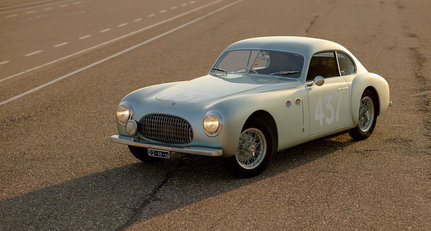
However, the Mille Miglia was calling, and for that they need a true motorway vehicle, not a single seater. Building upon the foundations set by the D46, the team at Cisitalia created the 202, which almost immediately delivered in the heat of competition. At the 1947 Mille Miglia, a trio of Cisitalia 202 competition prototypes finished in second, third, and fourth overall, not a bad first outing in the slightest.
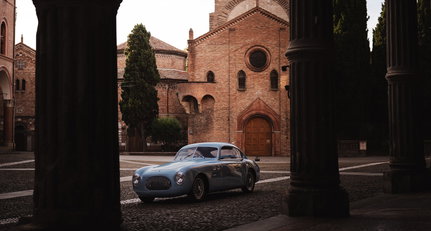
Capitalising on the buzz, the production version of the 202 was officially unveiled during the eve of the Italian Grand Prix on September 6th, 1947, before stunning crowds at Villa d’Este and the Paris Motor Show. Simple, elegant, and highly aerodynamic, Savonnuzzi had worked wonders on the Berlinetta, and while Vignale was the carrozzeria responsible for the first few aluminium-bodied cars, most of the 172 units were built by Pinin Farina with steel bodies, known as the 202 Gran Sport. The Cisitalia 202’s production ended in 1952, followed shortly after by the exile of Piero Dusio to Argentina, who had been ruined by financing the development of an F1 car and paying bail to release Ferdinand Porsche after his French imprisonment for collaboration.


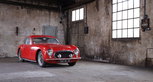
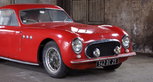
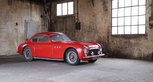
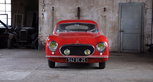
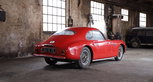
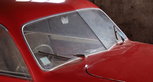
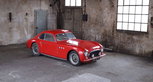
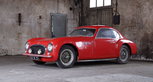
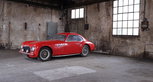
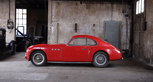
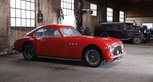
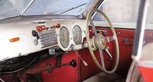
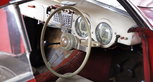
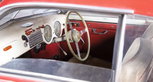
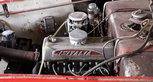
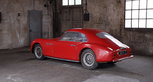
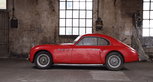
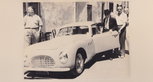
Our star car today, chassis 19, is one of the earliest examples built by Pinin Farina. Impressive for more than just its early build slot, this 202 has been in the same hands since 1973 and has been sheltered from the public eye ever since. Today it presents with beautiful patina throughout, boasting its factory interior, while there are some signs of a colour change, with blue paint under the current red, as well as evidence of front impact damage. The engine is also unoriginal, although the correct Cisitalia cylinder head cover is still present.

Aguttes believe this gorgeous 202 was originally delivered new to Monaco in either 1948 or 1949 , and their research has enabled them to compile a list of successive owners dating right back to 1951. Now you could add your name to this list of custodians of this incredible Cisitalia 202, allowing you to own and appreciate one of the era’s most gorgeous automobiles as it heads to Aguttes on Wheels’ Autumn Sale on November 30th. After all, there’s a reason Museum of Modern Art in New York thought it deserving of an exhibit.

 city-53f96f9e, 30 Nov