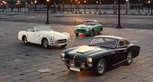
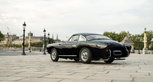
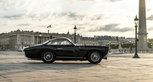

Pegaso is a name that won’t be familiar to many of the younger sports car enthusiasts in our audience. Indeed, for much of the brand’s history, the Pegaso name was most commonly affixed to buses, trucks, tractors and military vehicles, while it was only for a brief period during the 1950s that Pegaso tried its hand at sports car manufacturing in order to build their brand image and train apprentices. Despite their area of expertise falling on the functional rather than flamboyant end of the vehicular spectrum, the brand produced some truly exceptional and advanced automobiles under the wing of parent company ENASA, which itself was based in the old Hispano-Suiza factory. Today we have the immense pleasure of presenting a trio of these incredible “Spanish Ferraris,” all of which are heading to Aguttes’ Autoworld I Auction & Motion sale on October 11th in Brussels.


1952 Pegaso Z-102 ENASA Berlinetta
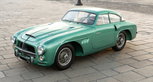
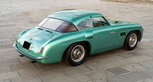
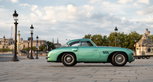
Our first four-wheeled pegasus is a gorgeous 1952 Pegaso Z-102 featuring bodywork by ENASA itself, rather than any of the leading coach builders of the era. Despite lacking experience in bodying sports cars, the result was a glorious grand tourer designed by Medardo Biolino, who drew inspiration from Battista Farina's work on the Ferrari and Cisitalia berlinettas.

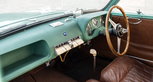
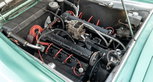
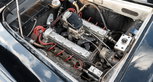
This car, chassis number 0106, was the first of the second series ENASA berlinettas and the first right-hand drive Z-102 and is recognised as the first Pegaso built specifically for competition with numerous race-focused modification from the factory. Initially powered by a 2.8-litre V8 engine before being fitted with a different supercharged unit for testing, this Pegaso would see another change under the bonnet six months later, with the supercharger being swapped out for four twin-barrel carburettors. Designed with weight saving in mind from the outset, chassis 0106 featured aluminium door panels, sliding windows, and plexiglass for the rear window. It’s competitive prowess was tested when it took part in La Vuelta in Andalusia with Gerardo Romero Requejo, finishing fourth in its category.
In January 1955, this Pegaso returned to the factory for a total transformation. It was then that it was repainted in the fabulous light metallic green it wears to this day, while the engine was replaced with a new 2.8-litre V8 fitted with single twin-barrel carburettor. Having spent the past 49 years with the same custodian, this Pegaso presents in outstanding condition and the odometer reading of just 16,000 km is believed to be accurate. Believed to be one of the oldest surviving Pegaso sports cars, this is an unmissable chance to acquire one of the most fascinating sports cars of the 1950s.


1953 Pegaso Z-102 Series 1 Cabriolet by Saoutchik
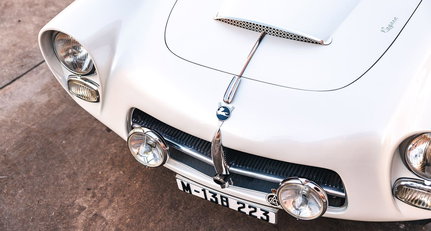
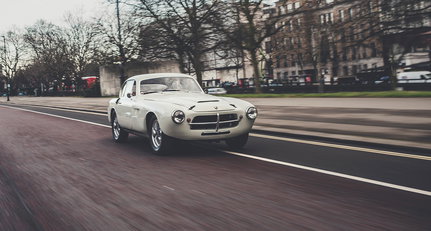
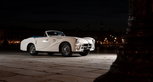
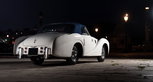
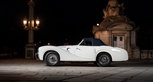
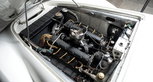
Saoutchik only ever built four cabriolets for Pegaso, and this car, chassis number 0134, is one of them. Displayed at Saoutchik’s stand at the 1953 Paris Motor Show, chassis 0134 is one of just two first-series convertibles built, and was originally finished in navy blue over a matching interior with a 2.8-litre single carburettor V8 under the bonnet. Following the Paris Motor Show, it was sold to a wealthy customer from Madrid, shortly after gaining the registration number M-109.179, which it retains to this day.

After passing between two other Spanish custodians, in the mid-1970s it was acquired by the same Barcelona-based collector as the 1952 Pegaso Z-102 ENASA Berlinetta presented above. Repainted in white, it was displayed at the national exhibition held alongside the Football World Cup in Madrid in 1982, at the Centre for Contemporary Culture in Barcelona in 2001 and, most notably, at the Pebble Beach Concours d'Elegance in 1994. More recent outings include the Techno Classica in Essen in 2012 and in Montmelo in 2013, while the majority of its life has been spent in the comfort of the current custodian’s personal museum alongside chassis 0106.
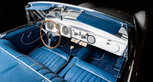
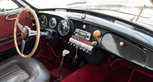
Today, chassis 0134 remains one of the most original examples in the world, and its perfectly preserved interior remains unchanged from the factory. Showing a mere 38,285 km, this Pegaso even comes with its original custom-made luggage and is ready to become the crown jewel in the collection of its soon-to-be fifth custodian.


1954 Pegaso Z-102 Series 2 Berlinetta by Saoutchik
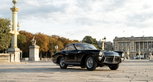
The Pegaso Z-102 was already a supremely rare ride, with only 83 examples in the world. Among them the Saoutchik bodied cars are some of the rarest, representing only 18 of the total. Of that number, just eight were Series 2 cars, boasting more taught, aerodynamic lines, and redesigned headlights. These illusive machines weren’t just beautiful, they represented Saoutchik’s swan song, with the legendary coach builder shutting its doors after completing the last four Series 2 bodies, which were then confiscated by the French state.
This car, chassis number 0137, was first registered in the name of Finanzauto, the company responsible for marketing Pegaso vehicles, and soon found its way into the hands of Jorge Fernandez Menéndez, an industrialist, major customer of ENASA’s industrial vehicles, and part-time racing driver. Menéndez didn’t waste time before putting chassis 0137 to work, entering the ‘Subida a la Dehesa de la Villa’ hill climb in Madrid on 21 November 1954, where it finished third, before returning to competition in early 1955 at the Universal Watches Trophy, a regularity event where it finished in 14th place.

One fascinating detail about chassis 0137 emerged when it was sold in late 1957 to Antonio Castellano Escalante, where the luxury tax payment revealed a code that indicated this Pegaso was fitted with a 3.2-litre V8 engine, making it the only Saoutchik berlinetta factory-fitted with a 3.2-litre engine. It’s believed that this larger engine was installed to keep Escalante happy after learning that Pegaso production had ceased and therefore their prices had fallen dramatically.
Chassis 0137 underwent a transformation at the end of the 1960s which saw its body colour changed to red (while the original black roof remained) and its original interior retrimmed in cream-coloured leather. A few years later, gearbox failure put chassis 0137 out of commission, and it wasn’t until1983, when the current owner purchased the car, that it was treated to a full restoration. The process lasted until 1989, and saw this Pegaso returned to its original specification before being exhibited at the Museo de Historia de la Automocion in Salamanca from 2002 onwards. Now this unique Pegaso is looking for a new custodian who will appreciate its fascinating history.
 city-53eca98b, 11 Oct