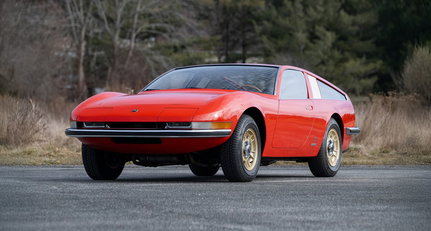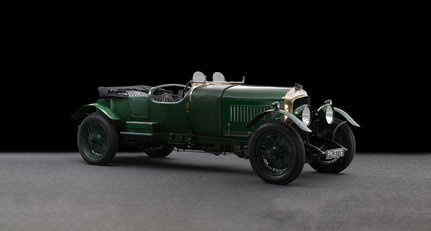
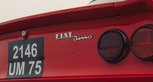
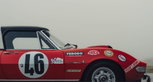
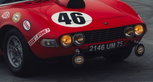
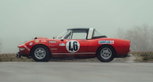
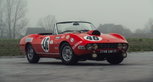
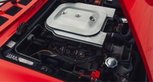
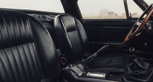
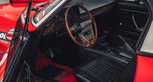
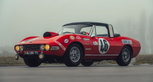


If ever there was a Fiat that could stop even the most seasoned enthusiast mid-scroll, it would be the Dino. Conceived not as a marketing exercise, but as a necessity, the Fiat Dino emerged from Ferrari’s need to homologate its 1,987cc V6 for the 1967 Formula Two season. Enzo Ferrari turned to the Agnelli family, whose industrial power could deliver the 500 cars required. Add Pininfarina’s elegant hand to the mix, and one of Italy’s most charismatic collaborations was born. Most know the Dino story, but few know that one Fiat Dino Spider went racing at Le Mans, and remains the only one to have ever done so. That sole car is now looking for a new home, as it heads to Broad Arrow Auctions’ upcoming online sale.

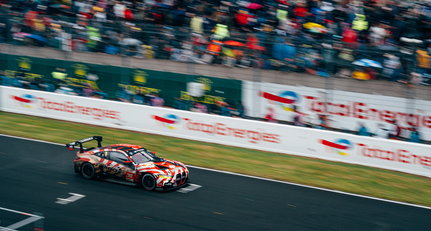
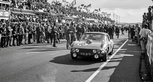
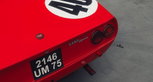
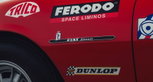
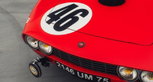
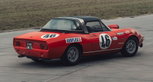
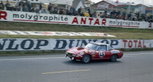
Chassis number 0598 lined up for the delayed 1968 24 Hours of Le Mans, postponed until September following the civil unrest that swept France earlier that year, entirely unsure of what the outcome may be for the plucky spider. It was entered by Ecurie Fiat-Abarth France and driven by Marcel Martin and Jean Mésange, the Spider wore a rarely seen hardtop and carried race number 46. Martin was no stranger to La Sarthe, he was a local who had grown up trackside, racing there since the 1950s, and would later serve as race director for nearly two decades.


Though fundamentally a road-going GT, the Dino was forced into the 2.0-litre Sports Prototype class due to fuel tank regulations. Its engine, prepared by Virgilio Conrero, produced 185 horsepower, while weight was pared back by 74 kilograms. Qualifying at an average of 171.458 km/h, it faced formidable opposition from Porsche 910s and Alfa Romeo T33/2s, cars that would go on to become some of the gruelling race’s most famed racers.
The race was a test of true resilience, where the Dino couldn’t escape drama and trips to the pits. An ignition issue caused overheating after nightfall, mitigated only by persistent rain. Still, the Dino pressed on, circulating through Maison Blanche, thundering down the Mulsanne, and thrilling spectators lap after lap. After 24 hours and 3,407.65 kilometres covered, the crew finished 16th overall, unclassified by regulation, yet heroes nonetheless.

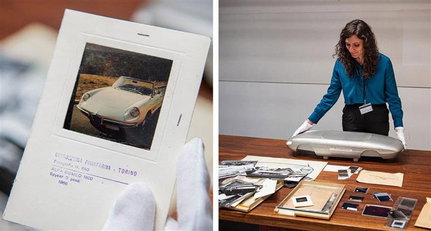
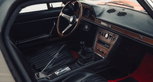
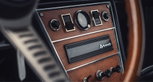
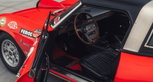
Returned to road trim after Le Mans, the car retained its hardtop and later received a correct Ferrari Dino V6, while its original matching-numbers Le Mans engine remains with the car. Today, with impeccable provenance and extensive documentation, this singular Fiat Dino occupies a unique place in endurance racing history, and in the hearts of those who know.
 city-54053e34, 30 Jan