











From the modernist revolution of the Bauhaus school and its most visionary architects and creatives like Walter Gropius and Ludwig Mies van der Rohe, to the post-war design masters like Dieter Rams and Otl Aicher who shaped the visual worlds of Braun, Lufthansa and Deutsche Bank — German designers have always strived to archieve less with more. There's a certain pragmatic restraint and rationalist reasoning in the country's aesthetic tradition, a fascination for functionality, geometric purity and the mechanical beauty of engineering. And if there was one automotive brand that best translated this aesthetic tradition onto four wheels, it must have been Audi.


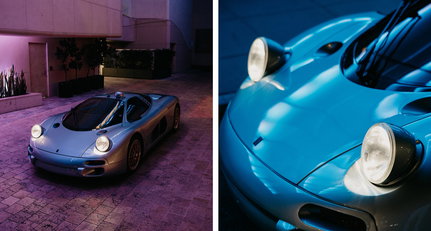
The legacy was started by Auto Union's streamlined and aluminium-bodied grand prix racers of the 1930s — free of all ornament and purely focused on aerodynamics and performance, they battled their competitors on the track. But it was the puristic Bauhaus revival of the 1990s that brought the company back to the top of the world: first in form of J Mays' sculptural 1991 Audi Avus quattro concept, and again in 1998 with Peter Schreyer's iconic Audi TT that celebrated absolute design purity with its perfect circles and arcs. Suddenly, polished aluminium wasn't just a material choice, but a design statement. And geometric purity became the ultimate goal from Ingolstadt to the Silicon Valley (where a young designer with a fascination for German design purism named Jonathan Ive was working on the first iPod prototype).

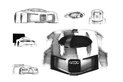
Now, after some years of aesthetic soul searching, Audi has proclaimed its return to its trademark minimalist design legacy. As a teaser of things to come, the company has unveiled a stunningly clean and simple yet striking concept car in Milan: the all-electric Audi Concept C. A roadster in the tradition of the TT, it features a strong shoulder line that defines the volume of the two-seater sports car, while its short-wheelbase proportions result from the mid-battery architecture. For the first time, Audi is using a power-retractable hardtop on a roadster: it consists of two roof elements that follow the monolithic shape of the vehicle while simultaneously enabling open-top driving pleasure. Still, the most relevant new design element is the vertical frame grille that draws back to the Auto Union Typ C racer from 1936, but also the 2000 Audi Rosemeyer concept and the 2004 Audi A6. We're confident to say that you will see this new vertical frame on Audi's future production cars — and in your rear-view mirror soon.


The Audi Concept C also introduces a new, ultra-minimalistic light signature consisting of just four horizontal elements on each unit, front and rear. The refreshing simplicity of the concept continues in the car's intertior, which abandons all ornament and digital clutter for the austerity of a zen temple. Furnished in light and natural titanium shades and illuminated by subtle ambient lights, the cockpit embraces a well-balanced architectural understatement that we imagine it would even appeal to the master of sensual minimalism, Peter Zumthor. The center of attention is a beautifully crafted steering wheel, while switches and buttons made of anodized aluminum provide a tactile feel with mechanical quality — and an unmistakable 'Audi click'.

Don't get us wrong, the Audi Concept C is not an analogue car. But the intelligent digital technologies aboard promise to be always available, but never intrusive. A centrally positioned, extendable 10.4-inch display provides all relevant information intuitively, appropriately, and based on context. Labelled 'Shy Tech', Audi's new approach promises a much-needed break from the maelstrom of Instagram, Tiktok and contemporary digital culture.

With a new design philosophy that focuses on clarity and simplicity in a world dominated by fast-paced trends and digital distractions, Audi is taking a bold step towards a reduced and timeless aesthetic to further differentiate the company in the face of increased competition. "Radical simplicity is at the heart of everything we do. We achieve clarity by reducing everything to the essentials," says Chief Creative Officer Massimo Frascella. "The way we design our vehicles is the way we will design our company," adds Audi's CEO, Gernot Döllner. The new design philosophy is therefore a corporate principle for Audi, which should also be reflected the company's organizational structure. Döllner: "Clarity is a stance and the compass that will guide Audi into the future." After its launch in Milan, the Audi Concept C will be on display at IAA in Munich from 9 September 2025.