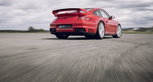
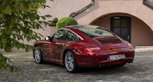
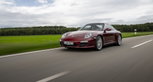
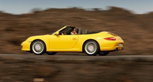
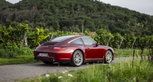
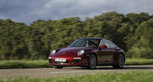
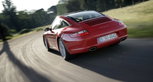
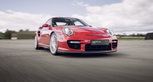
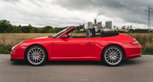
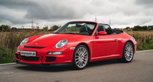


When it comes to the Porsche 911’s design, the motto has always been evolution rather than revolution. This is especially true for the front end with its round headlights, a feature that can be traced back to the original 356. The only real exception so far was the 996 generation. While the first water‑cooled 911 represented a major technical leap into modernity, its large 'fried‑egg' headlights were viewed critically by purists.
In 2004, its successor, the 997, was launched. It was essentially a thoroughly revised development based on a modified 996 platform. With this second water‑cooled generation, the Zuffenhausen‑based manufacturer returned to its classic design DNA and round headlights. For this reason alone, the sixth generation was highly regarded by enthusiasts from the very beginning.
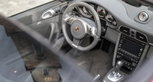
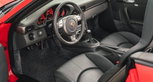
It also marked a huge improvement when it came to the interior. The five round dials remained almost unchanged, but the manufacturer significantly raised the bar for ergonomics and quality compared with its predecessor. The choice of materials and overall build quality still feel solid even two decades after the model’s debut. While the 996 had to share many components with its smaller sibling, the first Boxster, the designers and engineers were given far more freedom with the 997, making the brand’s core model more independent and premium overall.

A well-balanced mix
Built until 2012, the sixth‑generation 911 still remains a safe bet. It offers the typical Porsche feeling and plenty of driving fun at a comparatively reasonable price. “The 997 is simply an easygoing 911. You get in, and usually it just works reliably,” says Niklas Schlagenhauf from Boxermotor in conversation with Classic Driver. Unlike many competitors from that time, most 997s are suitable for daily driving in both summer and winter, as Porsche did not cut corners on rust protection.
The 997 is also appealing to younger Porsche fans with a moderate budget. Depending on the version, it remains relatively affordable and sits right between the modern 911s and the air‑cooled classics when it comes to the driving experience. “I would say the 997 is perfect in that sense because it still feels very original and is also noticeably smaller than the later models,” Schlagenhauf adds.
But it only became a real benchmark after its facelift in the summer of 2008. Porsche introduced the completely new '9A1' engine generation, which was equipped with direct fuel injection. It delivered more power and reduced fuel consumption. Porsche also replaced the traditional slush box with the faster and more dynamic PDK dual‑clutch transmission. Most importantly, the main weak points of this 911 generation were almost completely resolved with the 997.2.

The pre-facelift engines were problematic
"The 997.1 has certain issues, and they mainly concern the engines," says Schlagenhauf. The problematic candidates are the M96 and M97 units, which were also used in the Cayman and Boxster at the time. All 997 variants before the facelift had these engines, except the 911 Turbo, GT3 and GT2, which were still powered by the legendary Mezger flat-sixes. The engines have an intermediate shaft from the timing chains to the cylinder heads, whose main bearing often fails. Poor sealing causes the problem, as hot oil slowly washes out the vital grease. The part then grinds down unnoticed, and metal shavings eventually destroy the engine. The part can be replaced preventively, though.
That's not all: the cylinder walls are too thin by design, and a Lokasil coating was meant to compensate, but it did not work long term. The 3.8-litre version suffers most, as cylinders can deform over time, which leads to cracks. The result is piston slap, or in the worst-case scenario, piston seizure. These issues often start with clear rattling noises and can easily cost five figures in repairs. In the worst case, a complete replacement engine is needed, which with all peripherals costs at least 25,000 Euros.
Away from the drivetrain, the front dampers were problematic from the factory, as a material defect causes them to rust through and, in a worst-case scenario, fail completely when confronted with deep potholes. The climate condensers in the front bumper also leak from stone chips or corrode from dirt. The rear track rods often develop play. The oldest 997s are over twenty now, so you should definitely check if the wear parts have been replaced at some point. Especially when it comes to the suspension.
Niklas Schlagenhauf still sees the sixth 911 generation as solid across all versions despite these weaknesses. "Even the pre-facelift is a very rewarding Porsche in my opinion. The 997 dates back to the era before Porsche was part of the Volkswagen Group. You can feel that in the quality."


The Carrera S is an excellent all-rounder
Schlagenhauf recommends the post-facelift 911 Carrera S with manual transmission to buyers wanting a solid yet dynamic 911. Its 3.8-litre flat-six produces 385 hp and reaches 100 km/h in just 4.8 seconds. "It was already idiot-proof back then. You can drive these cars carefree, enjoy the driving fun as a bonus, and avoid major costs that later hurt the market value," confirms the expert from Boxermotor.
He recommends examples with lower mileage, so owners can enjoy their 911 longer. Whether looking for a coupe or cabriolet, a good Carrera S from 2008 onwards is priced from 75,000 to 90,000 Euros. Pre-facelift Carrera S models from 2004 to 2008 cost significantly less at 50,000 to 60,000 Euros due to their higher age and more fragile engines. The biggest increase in value will predictably come from the range's sporting flagships like GT3, GT3 RS and GT2. Niklas Schlagenhauf also sees great potential in the 997 GTS: "It's always been a real classic and something special," says the young Porsche specialist.