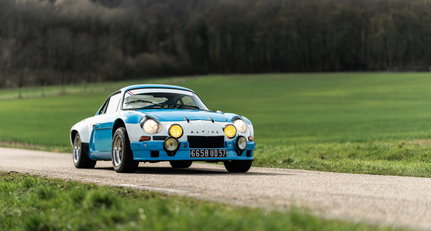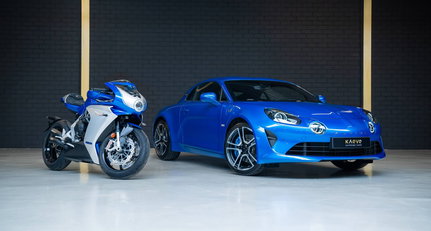












After an absence of more than 20 years, Alpine returned to the automotive stage with a triumphant comeback in 2017. The modern reinterpretation of the A110 was the right car at the right moment. It evoked memories of its historic predecessor – luckily not just in its name, retro-design, and reliance on Renault components, but also in its lightweight concept and agile handling characteristics.
While the brand from Dieppe had increasingly focused on Gran Turismos like the GTA and A610 during the eighties and nineties, it returned to its roots with the revival. The new A110, initially developed as a joint venture with Caterham, filled a gap in the market as many hardcore, purist sports cars were being discontinued, and some small manufacturers were even going out of business.


Gordon Murray daily drove one for years
The automotive press raved about France's new pride and joy in their initial reviews, an opinion shared by several industry heavyweights. Gordon Murray, one of the most legendary Formula 1 engineers of all time and the creator of the McLaren F1, even used one as his daily driver while developing the GMA T.50. The low-slung two-seater also won numerous comparison tests, even holding its own against its toughest rival, the Porsche 718 Cayman.
Furthermore, the modern-day A110 sold surprisingly well, consistently ranking as the second best-selling sports car in its segment on the European market for several years. In some months, its sales figures even approached those of the Porsche 911, and in its home country, it even surpassed the icon from Zuffenhausen for a while. Around 30,000 examples have left the factory in Dieppe since its introduction, making it the most-built Alpine of all time. Interestingly, demand isn’t really slowing down; even though the car was already seven years old at that point, 2024 was the production year with the highest volume.

The last Alpine of its kind
Even though it was never available with a manual transmission, it offered an emotional driving experience virtually unknown to most modern cars – Alpine founder Jean Rédélé would have been proud of this contemporary reinterpretation of his original recipe. Unfortunately, its successor won’t feel as light-footed and raw as the current generation, which will be the last one with an internal combustion engine. Alpine is still sticking to its plan to become an "electric only" brand. Meanwhile, the "final run" of A110s is currently rolling off the assembly line before the model eventually gets discontinued this summer.
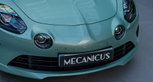
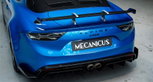
Luckily, the A110 doesn’t just handle and look good, but also offers a decent level of quality. “It is less refined than a Cayman, but much more refined than a Lotus. It is also much more fun on the road than a Cayman and more usable than a Lotus,” says Pierre Guibert of Mecanicus, a French classic and sports car dealership experienced with various A110 versions. The biggest merit of the mid-engined coupé is its chassis and damper setup, which comes close to perfection. It doesn’t just offer a lively and sharp driving feel, but thanks to hydraulic bump stops, also an excellent ride quality, which makes it stand out in the sports car world.


A masterclass in balance
“Most people don’t purchase an A110 with daily use in mind, but it actually works very well. It might not offer huge storage space, but it’s definitely a usable car. It is narrow and nimble in city centers or on the motorway, with very compliant suspension,” underlines Guibert. The 1,100-kg featherweight is also quite fuel-efficient. Magazines like Auto Motor und Sport determined a mixed consumption of eight liters; if you’re really gentle with the right pedal, even six liters are possible.
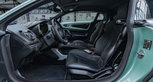
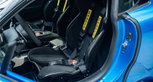
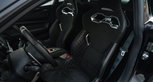
Renault’s sporty sub-brand placed a 1.8-liter turbocharged unit behind the seats, paired with a seven-speed dual-clutch gearbox by the German supplier Getrag. While the engine also powered the last generation of the Mégane R.S. (2017–2023), the hatchback utilized a different six-speed EDC or a manual transmission to handle its higher torque. While the four-cylinder produced either 280 or 300 hp in Renault’s hot hatch, its output was initially set to 252 hp for the reborn A110. Following the limited “Première Édition,” Alpine offered two main trim levels: the comfort-oriented “Légende” and the “Pure,” which focused on weight reduction through features like fixed Sabelt bucket seats.
The A110 R Ultime is a different beast altogether
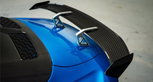
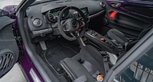
Over the years, Alpine sharpened the lineup, adding the A110 S, which saw a power bump from 292 to 300 hp in late 2021, and the track-focused A110 R. The latter features a completely reworked, stiffer, and manually adjustable suspension, a stripped-back interior, and a distinctive carbon fiber rear wing.
Since late 2024, the A110 R Ultime has reigned supreme. Powered by a 345 hp version of the same engine, it utilizes a six-speed dual-clutch gearbox capable of handling 420 Nm of torque — an 80 Nm increase over the “normal” A110 R. With a top speed of 285 km/h and a 0-100 km/h sprint of just 3.8 seconds, this tiny Frenchman almost enters supercar territory, capable of driving circles around its opponents on the track. Beyond the core lineup, Alpine keeps the brand’s heritage alive through numerous limited runs and the 'Atelier Alpine' program, offering exclusive paint finishes like the vibrant Orange Sanguine alongside tasteful special editions such as the San Remo 73 or the Enstone Edition.


A top performer with little to hide
Contrary to the prejudices some people might have towards French cars, the modern-day A110 is a remarkably reliable and robust vehicle. However, there are a few minor weak points to pay attention to, one of them being the fuel pump. “It’s located in an area of the engine bay where the heat is very high, but most failures are covered by the warranty. Even if not, it’s not a huge expense to replace it,” says the expert from Mecanicus.
“The gearbox is considered a potential weak point, but we have never seen an actual failure or replacement,” he continues. According to Guibert, the issue mainly arises during intensive track sessions where the cooling system's limits are reached. This heat management challenge reportedly leads many owners who push the A110 to its limits to invest in aftermarket parts. Cars built before the slight facelift introduced with the 2022 model year were also plagued by software bugs, which were eradicated with the new version. “Overall, the car is very solid. We’ve sold nearly 30 A110s and have almost never seen any issues with them,” states the expert.

He also points out that maintenance for the A110 remains affordable for a modern sports car, citing service costs of approximately 800 Euro every two years and noting that tires and brakes are also inexpensive to replace. Regarding the transmission, he explains that the requirements are similar to a Porsche, advising a service interval of 60,000 km for normal use and 30,000 km for frequent track sessions.
The A110 features an aluminium chassis and body panels; its construction is somewhat similar to that of a Lotus. Guibert adds: “There are no major weak points to inspect. Just check the overall condition of the car. If the car has been used on track, you will see it from the brake wear and rubber marks.”
Expect to set aside at least 50,000 Euro
Nine years after its introduction, one of the last kind of affordable drivers' cars is more sought after then ever. A phenomenon that you can also feel while looking for the perfect example on the used car market. “The demand is quite high for all versions of the A110. It fits different budgets and uses. The higher-end versions or very limited editions, which are more expensive, are the most difficult to sell,” says Guibert.
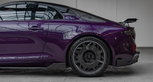
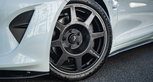
Entry-level models start at around 50,000 Euro, while a well-maintained “classic” A110 typically commands about 60,000 Euro. For those seeking a bit more oomph, the A110 S usually starts around the 70,000 Euro mark. At the top end of the spectrum, the track-focused R models are significantly more expensive: a bit less radical A110 R Turini costs around 95,000 Euro, while the full-spec A110 R with its signature carbon wheels reaches up to 105,000 Euro.


Which version suits you best completely depends on how you want to use the car. Mechanicus advises that for those primarily looking for a daily driver to enjoy on winding B-roads, the “classic” A110 is likely the best choice due to its comfortable suspension and engaging character at any speed. For a more performance-oriented experience with occasional track use, he recommends the A110 S, emphasizing that the optional big brake kit, aero pack, and carbon roof are essential features to look for. The A110 R on the other hand is an uncompromising track-tool, being significantly stiffer and far less suitable for the commute to the office.
According to the experts from Paris, prices for the A110 are really stable, especially in France. “We have sold almost 30 Alpine A110s over the years, and we have never seen a real drop in value in our market,” underscores Guibert. In the long run, the value of the first modern-era Alpine is far more likely to appreciate than decline. As its successor transitions to a purely electric drivetrain, many enthusiasts fear a loss of the visceral character that defines the A110—a shift that could alienate a significant portion of the core clientele and drive used prices upward once production finally ceases. Ultimately, the A110 is poised to go down in history as one of the last true lightweight and reasonably affordable sports cars, cementing its status as a future classic.
Photos: Mecanicus