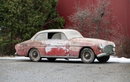
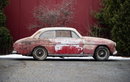



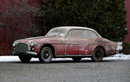













1951 Ferrari 342 America
-
Baujahr1951
-
AutomobiltypSonstige
-
Losnummer44
-
Referenznummer8EPKud0jusj8zp7aU36lR
-
LenkungLenkung links
-
ZustandGebraucht
-
Standort

-
AußenfarbeSonstige

Beschreibung
Ferrari’s exclusive America series, introduced in 1950 and aimed squarely at the prosperous US market, represents the pinnacle of early postwar Italian motoring. The first model in this series was the 340 America. Powered by a magnificent 4.1-liter Lampredi V-12 – closely related to the engines used in Ferrari’s contemporary 375 F1 – the 340 America offered formidable performance clothed in elegant, custom-built bodies by Pinin Farina, Vignale, Touring, and Ghia. Just 23 examples were produced through 1952.
In 1951, Ferrari introduced the 342 America, conceived from the outset as a pure road-going gran turismo. Built on a chassis with a 9" longer wheelbase than the 340, the 342 America featured a slightly detuned version of the same 4.1-liter Lampredi V-12, producing approximately 200 hp, paired with a four-speed, full-synchromesh gearbox for greater refinement and usability. Despite their grand touring mission, all seven examples of the 342 America were assigned even serial numbers – normally reserved for competition cars – underscoring their close ties to Ferrari’s earliest racing machines. To distinguish this new model from the original series, Ferrari applied the “AL” suffix, denoting America Lungo. Like its predecessor, ownership was reserved for royalty, industrialists, and leading sportsmen of the era, with buyers including King Leopold III of Belgium, Italian entrepreneur Attilio Monti, and Swiss Ferrari customers Otto Wild and Georges Filipinetti.
The very first 342 America constructed was chassis 0130 AL, the car offered here. Ferrari entrusted this chassis to Carrozzeria Ghia, a firm that bodied just 36 cars for the marque. Of the six remaining 342 Americas, the second example received cabriolet coachwork by Vignale, while the final five cars were bodied by Pinin Farina – two as cabriolets and three as coupes.
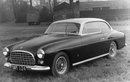
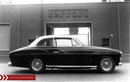
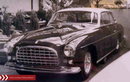
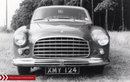
According to Ferrari historian Marcel Massini, the story of 0130 AL begins in March 1951, when its chassis components were fabricated at Maranello. Officially completed that August, the rolling chassis was dispatched to Ghia in Torino, where it received its striking one-off coupe body. While Ghia had previously bodied three 340 Americas, the design executed for 0130 AL differed in virtually every respect, resulting in a sober, elegant, and distinctly understated expression of Ferrari’s flagship gran turismo.
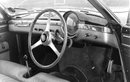
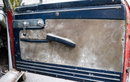
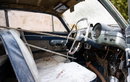
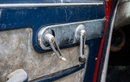
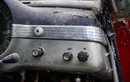
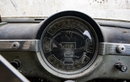
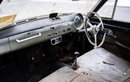
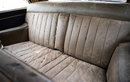
The Ghia Coupe was configured as a two-plus-two and finished in an elegant two-tone livery, believed to be dark blue with a silver-gray roof. The restrained color scheme continued inside, where the upper dashboard was finished in blue and the lower section in gray, complemented by blue and gray leather upholstery. The dashboard is a brilliant example of Ghia craftsmanship, featuring a band of polished trim and an unusual single-instrument binnacle housing a solitary Jaeger gauge containing the tachometer, speedometer, and odometer, as well as fuel level, water temperature, and oil pressure readings.
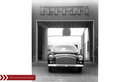
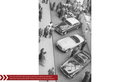
Upon completion, 0130 AL was selected by Ferrari to debut the new 342 America model on the world stage. Between October 4 and October 10, 1951, it was displayed on Ferrari’s stand at the prestigious Salon de l’Automobile at the Grand Palais in Paris, alongside a 212 Export Touring Barchetta and a 212 Inter Vignale Coupe. One week after the Paris salon closed, the car was shipped to London, where it appeared at the 36th International Motor Show at Earls Court from October 17–27.
At Earls Court, 0130 AL was exhibited on the stand of Brooklands of Bond Street, the Mayfair-based firm that served as London distributors for leading prestige marques including Alvis, Aston Martin, and Lagonda, and which had recently become Ferrari’s official British concessionaire. The car made a strong impression on the motoring press, with Autosport journalist John Bolster remarking that it was “another beautiful car” and noting that he had persuaded Stirling Moss to sit in it, with Moss agreeing that “the driving position, and all the controls, are ideally situated.” Bolster further observed that “the pedals are properly placed for ‘heel and toe’, and the small, wood-rimmed wheel feels delightful in the hands,” before wryly concluding that, while the asking price of £9,700 was formidable, “unfortunately Stirling and I had both forgotten our cheque books.”
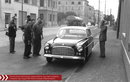
Following its motor show duties, the Ferrari returned to Maranello for final preparation and road testing on February 22, 1952. The car was then delivered back to Brooklands of Bond Street and sold to its first private owner: David Brown, the famed British industrialist and owner of Aston Martin Lagonda. It is widely believed that 0130 AL was the first Ferrari road car sold in the UK.
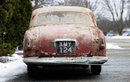
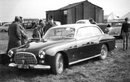
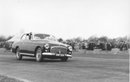
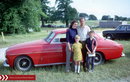
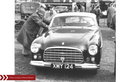
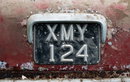
Brown registered the Ferrari as “XMY 124,” though the length of his ownership remains unclear. Period photographs show the car in the paddock at Oulton Park in 1955 and at other British meetings, wearing race no. 87, a British Racing Drivers’ Club badge affixed to the front bumper, and a Tulip Rallye sticker in the windscreen. By the mid-1950s, the Ferrari had been sold to G.M. Focquet of Oxfordshire, repainted in traditional Italian racing red, and re-registered as “MJJ 765.”
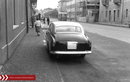
Subsequent English owners included Michael Ward, exotic car dealer Colin Crabbe, and noted Ferrari collector Stephen Pilkington. In late 1966 or early 1967, chassis 0130 AL was sold to Edwin K. Niles, a Los Angeles-based enthusiast responsible for importing many significant early Ferraris into the US. Whether the car ever reached California is unknown, as by May 1967 it was sold to Robert Chevako of New Woodstock, New York. Chevako is known to have driven the Ferrari to the Watkins Glen Sports Car Grand Prix in June 1967, after which the car disappeared from public view for decades.
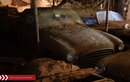
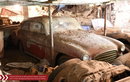
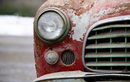
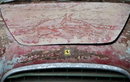
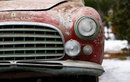
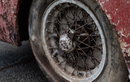
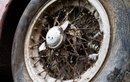
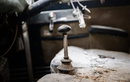
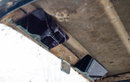
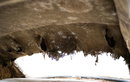
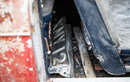
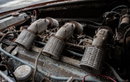
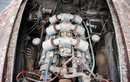
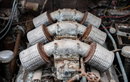
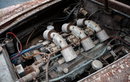
Recently acquired from Mr. Chevako’s estate by the consignor and carefully extracted from long-term storage, 0130 AL survives today in remarkable as-found condition. While it will require a comprehensive, ground-up restoration, the car remains largely intact, still wearing its UK registration plates and retaining elements of its original two-tone interior upholstery. Importantly, copies of Ferrari factory build sheets confirm that the car retains its matching-numbers engine (internal no. 16A).
With only seven examples ever produced, the 342 America ranks among the rarest and most exclusive of all road-going Ferraris. As the first built and the sole example bodied by Carrozzeria Ghia, chassis 0130 AL stands apart within this elite group. Add to this its role as a period factory show car in Paris and London, its early ownership by David Brown, and its later stewardship by some of the most respected names in early Ferrari collecting – including Crabbe, Pilkington, and Niles – and the significance of this car is unmistakable. Never before restored, publicly exhibited, or offered for sale, 0130 AL represents one of the most compelling and historically important early Ferrari projects to appear at auction in recent memory.
*Please note that this vehicle has been in long-term static storage and may not be currently operational. It will require mechanical attention prior to road use.