

1972 Ferrari 365
365 GTS/4 ‘Daytona’ Spider-
Baujahr1972
-
AutomobiltypCabriolet / Roadster
-
Chassisnummer15535
-
MotornummerB1632
-
ZustandGebraucht
-
Standort

-
AußenfarbeSonstige
Beschreibung
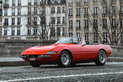
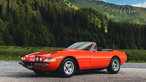
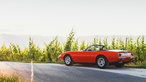
1972 Ferrari 365 GTS/4-A ‘Daytona’ Spider
One of just 19 European specification cars
• Delivered new to Lebanon via national agent Elie Ayache of Beirut
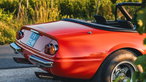
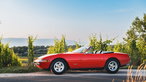
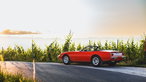
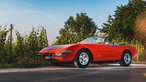
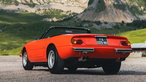
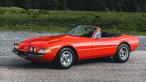
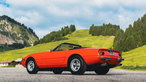
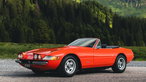
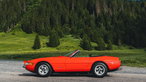
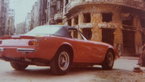
• Presented in as-delivered – one of two European cars in this livery – Rosso Dino, with rare air-conditioning
• Owned for many years by French gentleman racer and three-time Le Mans veteran, Jean-Pierre Delaunay
• Returned to its original colour in 2020 by official Ferrari bodyshop Carrosserie Lecoq Paris
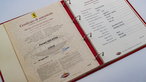
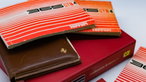
• Ca. 30,000km, continuous history from new, Ferrari Classiche certified
• European registered
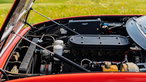
Intended primarily for the North American market and built to order by Scaglietti in small batches over a four-year period, the mighty 365 GTS/4 ‘Daytona’ Spider was the final original flowering of the classic front-engined V12 Ferrari convertible. The 365 GTS/4 Daytona Spider was just as powerful as the 170mph berlinetta courtesy of the same 352bhp, four-cam, six-carb motor, and became a regular sight in monied hot-spots from Palm Beach to Beverly Hills.
The ultimate Daytona Spider is always considered one of the European cars unencumbered by compulsory North American safety and emissions equipment.
This example, delivered new in vibrant, very of-the-day Rosso Dino to glamorous and cosmopolitan Beirut, greatly enjoyed by two gentleman racing drivers, is one.
The Ferrari 365 GTS/4 ‘Daytona’ Spider
The yellow car that was presented on Pininfarina’s stand in the muted surroundings of the 1969 Frankfurt Motor Show created a sensation. It was a stunning variation on the potent berlinetta that had itself debuted less than 12 months earlier, effortlessly blending the lines of the now flat rear deck with the top profile of the rear panel and the wide but sheltered cabin for two.
As a catalogued model – unlike the ten 275 GTB/4 NART Spiders – Ferrari gave it an official designation: ‘365 GTS/4’. The name ‘Daytona’, as always, was an informality and never used officially by the factory.
Although intended for a more sybaritic clientele, the Daytona Spider nevertheless packed all the ferocious punch of the coupé: a model that as a competition car had made its debut at Le Mans that summer. The all-new engine was, like the preceding 275 GTB/4, dry-sumped and mated to a five-speed transaxle: classic racing practice. As a berlinetta, the combination was good enough to claim the title of the fastest road car in the world matched with searing acceleration. A 365 GTS/4 Daytona Spider was almost as fast hood down.
Buyers wanted for little, simply choosing colour – many settled for Rosso Corsa, the most common shade today – wheels (Borrani wires or cast Cromodora light alloys) and the option of air conditioning. All bar the prototype bore ‘pop-up’ headlights.
In addition to one prototype, only 121 examples were made, and most were destined for North America. These US cars carried mandatory emissions and safety equipment. Only 19 were built to European specification, finding homes across the continent and in the Middle East, usually via Beirut.
Compared with North American-delivered Daytona Spiders, the differences on European cars included:
• Orange/clear front sidelight/indicator lenses vs. all-orange
• No rear reflectors or side marker lights
• Twin reversing lights vs. single
• Triple-ear knock-off wheel spinners vs. octagonal earless nuts
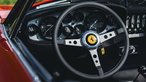
• Simple, rounded steering column vs. one with chassis number stamping on new cast section
• No seat-belt warning light or buzzer
• Polished aluminium steering wheel boss vs. antiglare black enamel
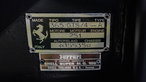
• No data plaque in door jamb, no emissions plaque in engine bay
• Full-strength all through the rev range, 352bhp engine with traditional, non-Dinoplex ignition, smaller, free-flowing silencers, big-diameter inlet manifold and exhaust headers. North American cars were also fitted with a power-sapping emissions air pump to the exhaust, a ‘fast-idle’ cam and an evaporative vapour recovery system attached to the fuel tank
• Lighter bumpers vs US ones with reinforced supporting struts
The Daytona Spider remained in production throughout the life of the berlinetta, with the last delivered on 1 September 1974. After the 250 GT California and 275 GTB/4 NART Spider, it remains the most coveted production Ferrari convertible.
This Motor Car
Beirut in the 1950s, ’60s and ’70s was an open, vibrant city beloved by Gulf state royalty and European pleasure-seekers searching for excitement in what was commonly referred to as the ‘Paris of the Middle East’. Unsurprisingly, it became a popular destination for expensive European sports cars from Mercedes 300 SLs in the 1950s, to Maseratis, Lamborghinis, Aston Martins and Ferraris in later years. Many stayed in the country, some lost forever, while others made the journey, usually by air, to Europe and the US.
Elie F Ayache was the official Ferrari agent in the Lebanese capital. His dealership was in Sin-el-Fil, an almost exclusively Christian suburb on the eastern outskirts of Beirut. Cars handled by Ayache for Middle Eastern buyers frequently came via Italian dealers such as Crepaldi and Achilli of Milan and often stayed in Italy or were delivered directly to owners in the south of France. At least four Daytona Spiders were sold out of Beirut.
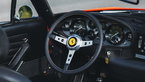
Daytona Spider ‘15535’ was completed in December 1971. Ferraristi may notice the ‘A’ suffix to the chassis number which some suggest denotes a lighter, stiffer chassis, but we have never found any proof of this. As a car finished in Rosso Dino (ref. 20-R-350), a distinctive 1970s orange, it was one of only two European-specification GTS/4s completed in the vibrant colour out of the six Rosso Dino Daytona Spiders in total. Four went to North America. As delivered, the car had beige leather interior (Connolly ref. VM 3218) with contrasting black Daytona inserts, air conditioning and Cromodora ‘star’ alloy wheels. The car was shipped on 25 May 1972 on the SS Ausonia from Venice. It was another transaction actioned in cooperation with an Italian dealer, this time likely Crepaldi of Milan.
Typical for the era, the days of turbulence in the Middle East and the worldwide oil crisis, the car remained unsold for a couple of years until bought by first owner Hilal Chalabi. Chalabi barely drove the Ferrari before Lebanese businessman William Ayoub, then in his mid-20s, saw it at his friend Ayache’s premises and, realising it was for sale, purchased it immediately. It was 1975, and after the faulty transaxle was swapped for one in a yellow Daytona coupé in stock, Ayoub drove off in the car.
Relating his experiences to Kidston in June 2025, Ayoub said that, on seeing the Daytona Spider in his friend’s garage amongst other cars in the collection, he simply, “jumped at it… it was perfect”. Ayoub remembers the interior as black when he bought it, though the car had hardly been used. An experienced driver – he later raced against Michael Andretti and Roberto Moreno in Formula Atlantic – Ayoub cautions against using all the power of the engine before really understanding the Daytona Spider’s competition-bred handling. “I once dropped the clutch and did a 360deg spin! But as I got to know its ways it was very, very fast. You have to start slowly then get quite tough with it. It would hold the road very well, in a sort of ‘special way’. I loved it. I never had an accident in it.”
He was not quite so enamoured with the funky colour and early in his ownership asked respected Italian bodyshop Pavesi of Milan to repaint it classic Rosso Corsa. After enjoying the car in Europe, later in the 1970s business took Ayoub to Canada and the treasured open Ferrari came too. After some five years of enjoyable driving – “some 20,000km, no more” – the time came to move on and the car was advertised, still in Canada, in Road & Track.
French gentleman racing driver, veteran of three Le Mans 24 Hours and many other international races in Porsches and Ferraris, Jean-Pierre Henri Delaunay, who had been driving a North American racing Team Ferrari 512 BB and BBLM at Daytona and Le Mans, saw the advertisement. Delaunay, the winner of a Chinetti Trophy awarded to young French drivers giving them an entrée to racing at Le Mans, flew to Montreal to view the car. A deal was done over dinner, with half the purchase price of $12,000 paid immediately. Five days later, ‘15535’ had been flown to Paris and Ayoub and Delaunay drove in convoy – Daytona Spider and Coupé – from the airport to central Paris to celebrate.
The Daytona Spider remained in Delaunay’s possession until 1996. During that time, it was driven with relish in Canada (on Quebec plate 628L 712) and France, where it was registered 6009 WA A 92 (Hauts-de-Seine). In 1985 it appeared on the cover of Club Ferrari France magazine, issue number 19. During 1994 Delaunay drove it at the Club Ferrari France meeting at Pierre Bardinon’s private track Circuit Mas du Clos.
As of 1996 the car had recorded a mere 24,000 kilometres. Speaking to Kidston in June 2025, Delaunay remembers the red open Ferrari with fondness: “I was friends with the people at Pozzi [Ferrari agent in Paris] and they always maintained it. All I did was fit Borrani alloy-rim wire wheels, 9in at the rear. It was very reliable other than the noisy transaxle that needed rebuilding.”
Good things must come to an end and in April 1996 – “Comme un cretin!” (like an idiot), as recounted to us – Delaunay sold the car at a Paris classic car auction and it was re-registered on French plates 2314 TD 28 (Eure-et-Loir, just west of Versailles). The next three years saw it advertised in the trade until bought by Italian Ferrari enthusiast and collector Luigi Calvasina in 1999, immediately commissioning thorough recommissioning, retrimming and repainting work with Pinuccio at Sport Car in Milan. On completion, the car, though, remained Rosso Corsa with black.
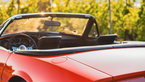
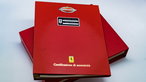
In December 2001 it was sold via Simon Kidston at a Bonhams Gstaad Ferrari auction to Dutch Ferrari collector and racer John Bosch, who kept it in climate-controlled comfort in his world-class museum. At that stage the odometer read 26,189km and Bosch added just 150km. Turin-based collector and banker Claudio Giovannone purchased it via Simon Kidston at the 2005 Bonhams Gstaad Ferrari auction, putting the car forward for Ferrari Classiche Certification in 2015. The ensuing Red Book confirmed all numbers match other than the transaxle replaced in Beirut in the 1970s. The car changed hands once more in 2016 and in more recent years it has been with the current owner in France. In late 2020, official Ferrari bodyshop Carrosserie Lecoq Paris completed a bare-metal respray of the Ferrari for them, returning it to correct Rosso Dino. The high-quality black interior installed for Calvasina in the early 2000s was retained.
While researching this car, conversations with its two long-term former-racing driver owners revealed both men’s passion for the Ferrari. Each of them loved driving ‘15535’ and both regret selling it. Presented in one of the great 1970s Ferrari colours, to desirable European specification, this low-mileage Daytona Spider is ready for another hard-charging owner. Every great Ferrari collection – in fact every great sports car collection – should include one.


Watch our latest videos
Verwandte Anzeigen zu Ferrari 365


Empfohlene Angebote